
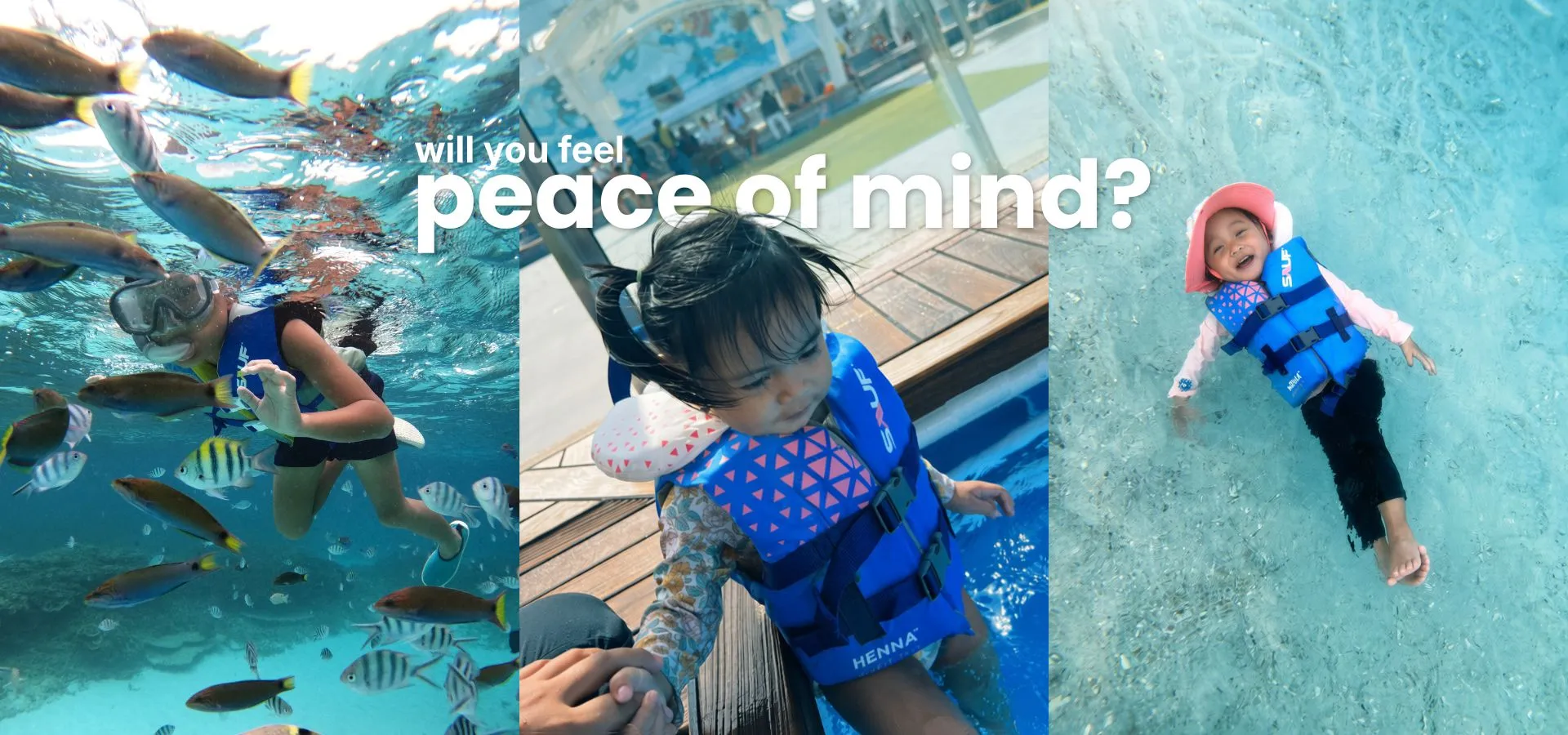
Do you ever wonder which water flotation device is best for your baby or young child? Malaysian children are known to have smaller body sizes. Finding a body-fit water safety jacket for kids is crucial.
In this guide, we will be discussing everything there is to know about personal flotation devices designed with children in mind, which focus on kids’ safety, comfort, and learning ability. If you plan to book your next holiday trip that involves water recreational activities, read How A Safety Swimming Vest Helps Parents Enjoy Holidays.
Jump ahead to specific sections using the links below, or read on to learn about types of flotation devices and how to choose the right one for your kids.
- Which flotation product is correct for my child?
- How to choose kids’ personal flotation device
- How to find the right size for kids
- 5 common mistakes parents make
- Buy size for kids to grow into
- Rushing to use it immediately without giving kids enough time to become familiar with their own PFDs
- Assuming all swim vests safely float your kids
- Ignoring water confidence exposure
- Becoming anxious or overconfident with swim vests
- Where SAUF fits
- Where a SAUF may not be the right choice
- Before you take your child swimming
Shop Swim Vests for Baby and Kids
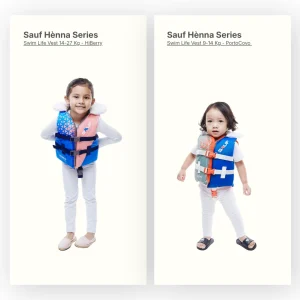
See all Baby and Kids Swimming Life Vests on saufasia.com
Which Flotation Product is Correct for My Child?
First, ask your motherly instinct: why do you need the swim vest for your kids? Is it to make sure they’re buoyant when in the water at a level where their feet don’t touch the bottom? Or to be used for swim-assisted learning?
| Feature | Swim Vest | Swimming Life Vest |
|---|---|---|
| Best Use | Swimming pool only | Swimming pool, river, beach, snorkeling, boat ride – family water recreational activities |
| Weight & Packability |
Inflatable or foam type jacket. May not nicely-fit to kid’s body |
Compact, lightweight, even enough to fit into kids' backpacks |
| Comfort | Questionable floating condition |
Snug-fit young kid’s torso, non-restricted movement for active kids.
Encourages horizontal floating (float on tummy) & back floating (float on backside) |
| Cost | Typically easy on your wallet | Often more expensive due to lightweight, technical materials and safety features |
How to Choose Kids’ Personal Flotation Device
Now that you’ve decided you need a vest-type flotation device, 3 key factors parents must look after:
1. Get the Right Buoyancy, Always
Whether the kid floats or sinks relates to the kid’s current weight, because buoyant force is calculated with the object’s weight, NOT AGE. That is why weight is the main measurement when buying a water safety jacket. Then, what about the kid’s age and height? These will be explained in the section How to Find a Kid’s Right Size.
2. Weight Range for Growing Kids
Even though kids’ current weight is required when purchasing, a good personal flotation device should have a practical weight range to allow adjustability for growing kids.
This matters when choosing a flotation vest for a young child.
A very broad weight range may place children of considerably different ages, body proportions and developmental abilities within the same product size. For parents, the question should therefore go beyond:
“Does my child’s weight fall within the stated range?”
It should also be:
“Is this vest appropriately sized for my child’s current body, physical development and stage of learning in the water?”
For younger children especially, a well-considered size should provide an appropriate balance of secure fit, buoyancy, comfort and freedom of movement. An appropriately sized vest can let the child move and explore the water while building familiarity and confidence under close adult supervision.
3. Comfort Material, Nurture Learning
When it comes to baby and young kids’ products, comfortable wear isn’t negotiable. Not only is the soft nylon fabric which made the outer layer of the SAUF Hènna Series, but the entire life vest’s construction also brought shirt-alike, supports toddlers’ continuous movement- crawling, rolling, and running, ultimately the face-up features in the water where safety is absolute.
When your kids’ water vest is too stiff, tight, heavy, or abrasive, not to mention loose while in the water, they experience a subconscious restraint, and the parent will quickly abandon those vests. Not to say the disappointment when a water vest was supposed to keep them face-out-of-water, but they had otherwise. This trauma is even harder to heal.
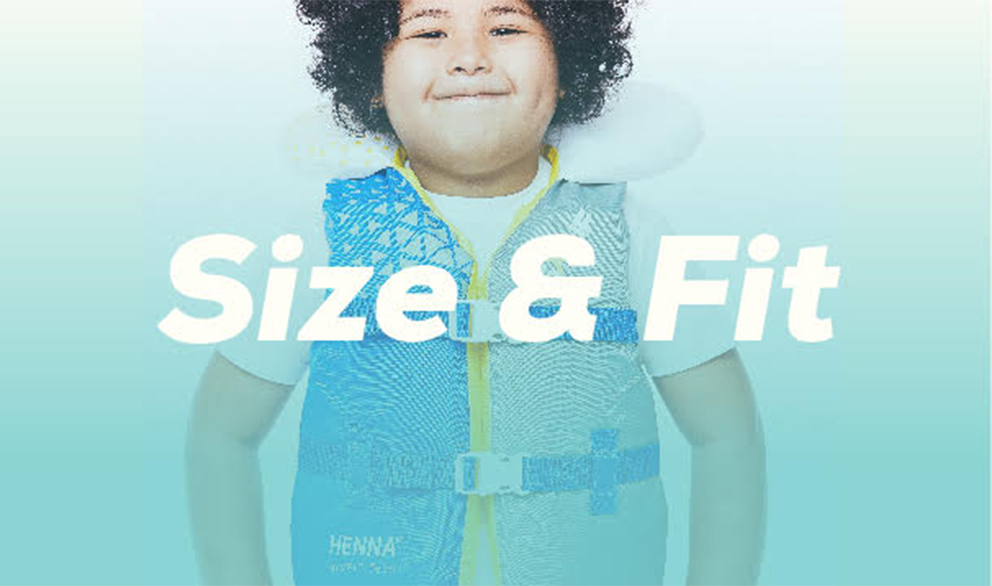
How to Find Kids’ Right Size
Finding a kids’ flotation jacket that fits right is easier than ever these days, as more brands like SAUF offer a range of sizes to suit different baby and kids’ body sizes.
“The market has been shifting from declaring age range to weight range sizes”, explains Ferdaus Rafaie, a Technical Product Specialist for the SAUF brand who helps parents find the right safety float vest. However, weight alone does not tell the whole story. Children grow and develop at different rates, and their movement and ability to learn change as they grow. A safety swim vest should therefore consider the child’s growth and development alongside their weight, so the gear can provide the right balance of safety, comfort, and freedom to learn in the water¹.
At the age of 1 year old, it is a good start to learn and become comfortable in the water with vest assistance. A baby at this age usually weighs 9 or 11kg will learn natural float positioning on their back with SAUF 9-14kg. As they grow and reach a body weight of 12kg, toddlers will adapt to control buoyant position from float on backside to float on tummy; this transition of growth and learning makes SAUF distinctive from other brands.
“What if my kid is 13 kg and 3-years-old, which size should I buy? If I get him SAUF 9-14kg size, he will be wearing at short period of time. Whereas if I buy SAUF 14-27kg, will the vest be too big for him?” asks Liam, a mother from Kuala Lumpur. “It’s common for us to encounter parents who struggle to make a decision when their kids are transitioning from 9-14kg to 14-27kg in size. We usually welcome them to visit our SAUF Vest Dealers if they’re near us, or we’ll ask more about your intended water environment so we can help you get the right one. Our digital customer service is always there to help,” says Ferdaus.
Ferdaus recommends checking your kids’ current weight when purchasing the right-size safety swim vest. “Age is our second measurement reference when deciding the size. More than 15000 families have been wearing SAUF since 2017, and we are certain our size fits right.”
While other brands use chest and height as their size reference, SAUF did not. “Chest measurement and height may be required for youth and adult sizes. But certainly not for baby and children market segments,” explains Ferdaus.
“We even encountered children, like 2-year-olds, coming to us; all of them have different weights, even there are the same age. So the same age doesn’t necessarily mean the same fit. In the end, it’s about what kind of water experiences parents want their children to have,” emphasizes Ferdaus.
5 Common Mistakes Parents Make
1. Buy size for kids to grow into
No such thing as one size fits all when it comes to water safety equipment, especially when involve babies & kids. 18-month-olds definitely have huge differences in torso size and shape compared to 5-year-olds.
A good swim vest fits properly to the wearer’s torso, without compromising buoyancy requirements. The SAUF Life Vest 9-14kg fits nicely from 18 months to around 4 years, with 27 newtons to keep heads up when floating in the water where feet do not touch the bottom.
2. Rushing to use it immediately without giving kids enough time to become familiar with their own PFDs
Now, ask yourself. Have you experienced wearing a boatman-provided life jacket, then suddenly going snorkeling in the open sea? How’d you feel? Do you enjoy it or get anxious?
It is the same can happen to your young kids. Without giving them appropriate time to learn how to get familiar with his flotation jacket, you book a snorkeling trip and let them float in the open, wavy sea.
A life vest may save your kid’s life, but only if babies and kids know how to adapt and adjust while wearing their personal flotation device in the water, including experience in various water environments.
Floating on a wavy beach gives a different feeling than swimming in the river. It is either to use Sauf vest’s Large 3-Petals Collar when back floating, or to swim horizontally. This adaptability happens when a kid gets used to his own safety swim vest while applying the safety function whenever it is needed.
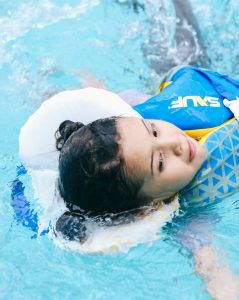
The Large 3-Petals Collar, a patented design from SAUF
3. Assume all swim vests safely float your kids
Why do you still hold your kids in the water eventhough with swim vest? Is it because you don’t trust the vest, or you feel anxious your kids get submerged? The reason behind is the same. You’re not confident with the gear your kids are wearing.
A good swim vest should provide enough buoyancy so kids will float in a horizontal, safe position. A bad swim vest forces kids into an unnatural vertical floating position yet makes them tip forward face-first into the water, making it hard for them to recover and breathe.
The Sauf vest’s entire jacket construction was a patented design, allowing kids in either of two situations: the user controls the vest float positioning, or the Sauf vest is taking charge in controlling the float position.
Key point: A parent who is well-prepared feels unworried, because you witnessed your kids were able to adapt, adjust, and react accordingly with a Sauf life vest when in the water.
4. Ignoring water confidence exposure
Frequent exposure creates familiarity. Familiarity develops confidence. There’s no magic when it comes to swimming. The more exposure to different water environments, the more confident your kids become.
“My 1-year-old son’s water confidence increases day by day when he used Sauf Vest. We frequently bring him to our resident pool. He even wears the vest from our unit and refused to remove it,” said Dharsiga
Pro tip: Start early with Sauf life vest 9-14kg. Just like Anishnashwa Did to Her Son, Omar.
5. Becoming anxious or overconfident with swim vests
Anxious parent: With a flotation vest, you feel uncertain about allowing kids to swim in the pool area where their feet do not touch the bottom. So your kids use a swim vest in shallow water; the act is of no point in learning to swim. The purpose of a swim vest is for your kids to feel the buoyancy in the water, thus promoting them to learn to swim later.
Overconfident parent: You left your kids playing in the water while you rested on the bench far from them; you’re underestimating what kids can do when they’re playing with peers. They can be so creative. Reminder: kids are actually ‘playing’ in the water, not swimming! When playing, uncertain acts happen. Accidents can be prone here.
A flotation device does not replace adult active supervision whenever kids are in the water. The parent’s function is to monitor them while allowing them to explore and learn.
Where SAUF Fits
Now you know that buying a bulky, restrictive Type I or II life jacket can limit young kids’ movement and learning, and that choosing a swim vest raises questions about its safety features; that is why the SAUF safety swimming vest was designed. A hybrid product fulfils the need in between, nurturing learning and is safe to wear at family water activities. “The DryFIT Tech construction makes SAUF’s lightweight (the SAUF toddler vest weighs just 218 grams), dries rapidly, and does not stay damp for hours, unlike a standard neoprene jacket.
SAUF Hènna series face-up function keeps the conscious and calm toddler face-out-of-the-water, widely recommended by swimming coaches, particularly at the very early stage of exposure for water familiarization. “The SAUF features assist in building toddler confidence from age 18 months to 3 years old, where parents can, together with their kid, use the Self-Guided at Home Pool, or wherever they’re going for water holiday trips. When the kid develops confidence, teaching swimming-specific skills later is much easier, and the kids catch the skills faster,” added Zack Salim, who has been a swim coach since 2009.
The SAUF shirt-like, lightweight design incorporates features such as a top grab handle and double-click lock buckles, which have made it suitable as a safety tool in Smart Integrated Therapy’s hydrotherapy programme, where SAUF has been used since 2019.
In hydrotherapy sessions, children may respond to the water environment differently — from becoming highly excited or anxious to experiencing challenges with movement, coordination or muscle tone. The SAUF vest is designed to provide additional buoyancy and support while allowing relatively free arm movement. Its head-supporting design and secure fastening system can also help therapists maintain a more stable position while working with the child in the water.
You can see examples of Smart Integrated Therapy using SAUF during hydrotherapy on their official Facebook page, where therapists work with children while wearing the SAUF swimming vest.
Importantly, a flotation device should be considered one layer of water safety rather than a replacement for supervision or appropriate professional instruction. PPEC of Palm Beach’s guide on water safety for children with special needs similarly recommends properly fitted flotation devices suited to a child’s individual needs, alongside close supervision and adapted swimming instruction.
Source: PPEC of Palm Beach, “Water Safety for Children with Special Needs: A Parent’s Guide” (June 9, 2025).
Where a SAUF May NOT Be The Right Choice
If you’re planning to do water recreational activities with your young kids, where to go and what kind of water environment you will experience must be counted into your plan.
“We have parents who are planning to snorkel with whale sharks in Oslob, Cebu, Philippines, and bring their 18-month-old daughter. The father asked us, is possible to tie his life jacket to his son’s SAUF life vest while watching the whale shark. We definitely do not encourage parents to do that. The son must be in balance while wearing his own PFD. You can swim by pulling the top grab handle instead of tying it to you,” explains Ferdaus.
Water activities more than 30 nautical miles where rescue takes longer to arrive are not suitable too. Rough open waters and extreme currents are not suitable for the SAUF Hènna series because its lightweight PFDs are designed for calm, inland waterways or where there is a good chance for fast rescue; unlike the SAUF Neovi Series, it is classified as Type II Life Jackets, has much more buoyancy than PFDs, and performs better in the water. However, the Neovi series is more bulky and less comfortable than the Hènna series, but less bulky than Type I lifejackets.
Before You Take Your Child Swimming
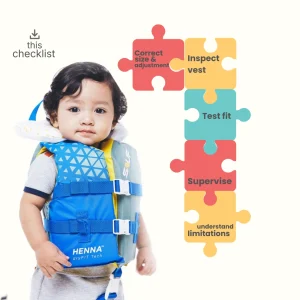
A SAUF vest only works if your kids are properly wearing it, get used to their very own PFDs, and are able to be calm and confident when in the water where their feet do not touch the bottom. We recommend parents practice Backfloating At Home And Knowing Why It’s Important. Parents should save this practical checklist before you take your child swimming.
References:
1) National Academies of Sciences, Engineering, and Medicine, Child Growth and Development, NCBI Bookshelf. https://www.ncbi.nlm.nih.gov/books/NBK310550/
2) PPEC of Palm Beach. Water Safety for Children with Special Needs: A Parent’s Guide. June 9, 2025. Read the full guide, https://ppecpb.com/blog/water-safety-for-children-with-special-needs-a-parents-guide/